Rohani Ilaaj
Quranic Spiritual Healing
قرآنی روحانی علاج
- Areas of Rohani Ilaaj
- Seeking spiritual comfort through Qur’anic guidance and authentic practices
- Finding strength and reassurance during difficult or uncertain times
- Seeking support for personal concerns, worries, or spiritual uneasiness
- Strengthening faith through Qur’an, Dua, Dhikr, and remembrance of Allah
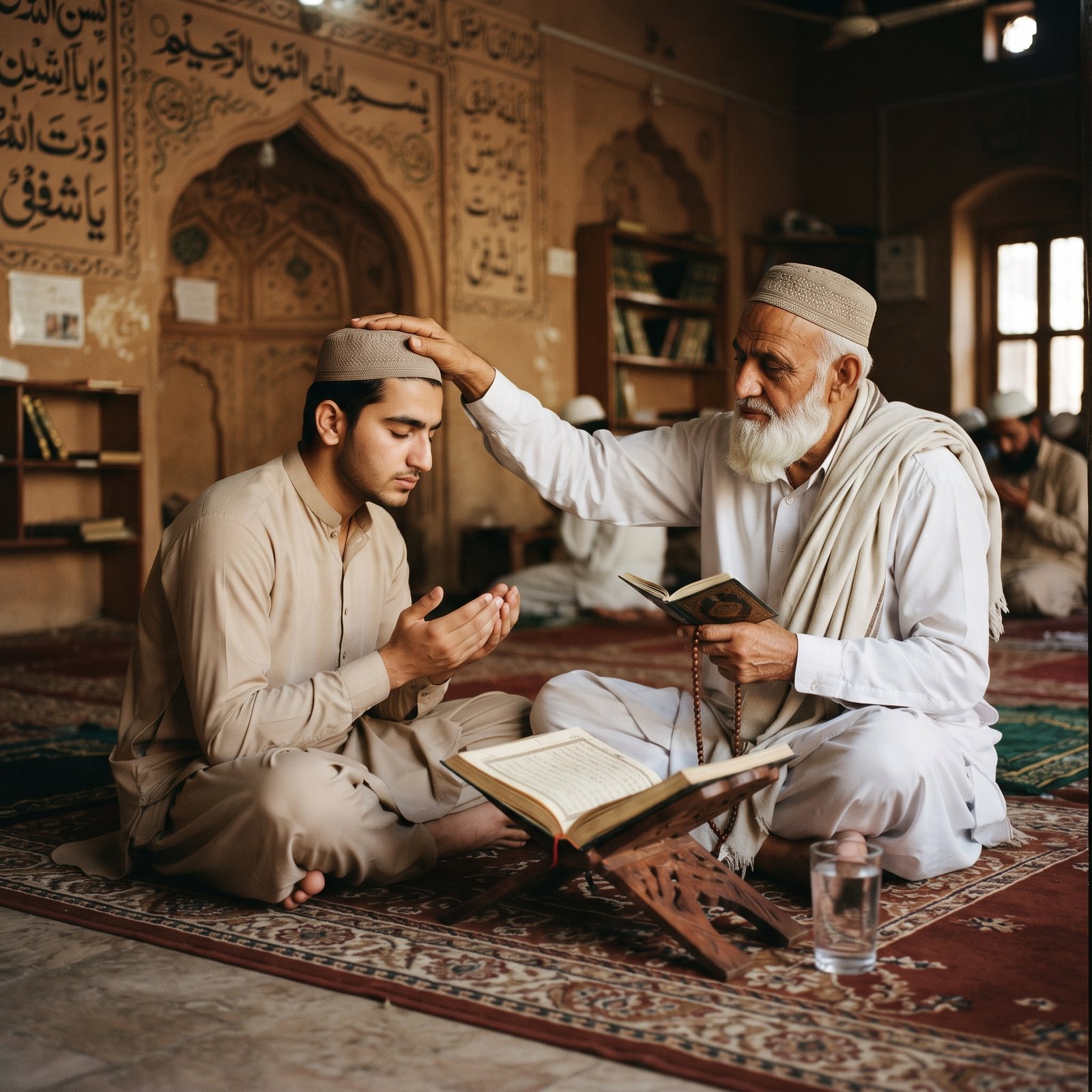
“Rohani Ilaaj is a faith-based approach rooted in the Qur’an and authentic Sunnah. Through Qur’anic recitation, sincere Dua, Dhikr, and remembrance of Allah, we seek His mercy, protection, and comfort, helping individuals strengthen their faith and find peace during life’s difficulties.”
Our Rohani Ilaaj guidance is rooted in the authentic Qur’an and Sunnah of Prophet Muhammad (PBUH). We encourage Qur’anic recitation, sincere Dua, Dhikr, and authentic Islamic practices to help individuals seek Allah’s mercy, protection, comfort, and spiritual strength. Our approach focuses on faith, prayer, remembrance of Allah, patience, and complete trust in Him.
Islamic Foundations for Guidance
Our Islamic guidance is based on authentic references from the Al-Qur’an and Sahih Ahadith, with sincere Dua, Dhikr, and Sunnah-based practices.
Al-Qur’an (القرآن)
وَنُنَزِّلُ مِنَ الْقُرْآنِ مَا هُوَ شِفَاءٌ وَرَحْمَةٌ لِّلْمُؤْمِنِينَ
“اور ہم قرآن میں وہ چیز نازل کرتے ہیں جو ایمان والوں کے لیے شفا اور رحمت ہے۔”
سورۃ الإسراء — 17:82
Al-Hadith (الحديث)
اعْرِضُوا عَلَيَّ رُقَاكُمْ، لَا بَأْسَ بِالرُّقَى مَا لَمْ يَكُنْ فِيهِ شِرْكٌ
”اپنے رقیے میرے سامنے پیش کرو، ایسے رقیے میں کوئی حرج نہیں جس میں شرک نہ ہو۔”
Sahih Muslim, 2200
Frequently Asked Questions
Answering Common Questions
What is Rohani Ilaaj?
Rohani Ilaaj is faith-based spiritual support using authentic Qur’anic recitation, Dua, Dhikr, and Sunnah-based practices while relying upon Allah.
What does Rohani Ilaaj include?
It may include Qur’an recitation, authentic Duas, Dhikr, and guidance based on Islamic teachings to support spiritual comfort and well-being.
Is Rohani Ilaaj based on the Qur’an and Sunnah?
Yes. Dua Markaz follows authentic Islamic teachings and avoids superstition, fortune-telling, astrology, and practices involving shirk.
Can Rohani Ilaaj help with spiritual concerns?
It can provide faith-based support for feelings of spiritual uneasiness, fear, worry, and other personal concerns while encouraging prayer, patience, and trust in Allah.
Is Rohani Ilaaj a replacement for medical treatment?
No. Spiritual practices can complement appropriate professional care, but medical or mental health concerns should be assessed and treated by qualified healthcare professionals.